
Gestational diabetes can develop without noticeable symptoms, while pregnancy hormones steadily change how your body responds to insulin. By understanding screening, pregnancy-specific glucose targets, home testing, meals, activity and treatment escalation, you can recognise the readings that need routine adjustment or prompt medical advice.
Key takeaways
- Gestational diabetes can develop without thirst, fatigue or other warning symptoms.
- Use a glucose meter and record fasting and post-meal readings as directed.
- Pair carbohydrates with protein, choose measured portions and walk after meals when approved.
- Contact your care team when readings repeatedly exceed your prescribed targets.
What gestational diabetes is and how testing finds it
Placental hormones progressively make your cells less responsive to insulin, so glucose stays in your bloodstream instead of moving efficiently into cells. This insulin resistance rises as pregnancy advances. Gestational diabetes is high blood sugar first identified during pregnancy, and you can have it without thirst, tiredness or any other warning symptom.
Gestational diabetes screening usually occurs at 24–28 weeks. If you have important risk factors, your clinician may order fasting plasma glucose pregnancy testing or an oral glucose test earlier. If that early result is normal, repeat screening at 24–28 weeks because insulin resistance increases later.
- Ask which diagnostic strategy your care team uses. Do not combine thresholds from different methods.
- For the 75-gram oral glucose tolerance test, you fast, provide a fasting blood sample, drink 75 grams of glucose, then provide timed samples at 1 and 2 hours. One value at or above the threshold is diagnostic: fasting 92 mg/dL (5.1 mmol/L), 1-hour 180 (10.0), or 2-hour 153 (8.5).
- The 100-gram, 3-hour two-step test requires at least two Carpenter–Coustan values in most protocols.
| Test | Diagnostic thresholds | Result needed |
|---|---|---|
| 75-gram, one-step | Fasting 92; 1-hour 180; 2-hour 153 mg/dL | One abnormal value |
| 100-gram, 3-hour, two-step | Fasting 95; 1-hour 180; 2-hour 155; 3-hour 140 mg/dL | At least two abnormal values |
Which blood sugar numbers to target and how to monitor them at home
Common gestational diabetes blood sugar targets are:
| Timing | Target | How to time it |
|---|---|---|
| Fasting blood sugar pregnancy | Below 95 mg/dL (5.3 mmol/L) | On waking, before food or drink |
| Before meals | Below 95 mg/dL (5.3 mmol/L) | Immediately before eating |
| 1-hour post-meal glucose reading | Below 140 mg/dL (7.8 mmol/L) | One hour after the first bite |
| 2-hour post-meal glucose reading | Below 120 mg/dL (6.7 mmol/L) | Two hours after the first bite |
Follow the targets and timing chosen by your obstetric or diabetes-care team. Use either the one-hour or two-hour post-meal target as instructed; do not try to push readings as low as possible, because excessive treatment can cause hypoglycemia.
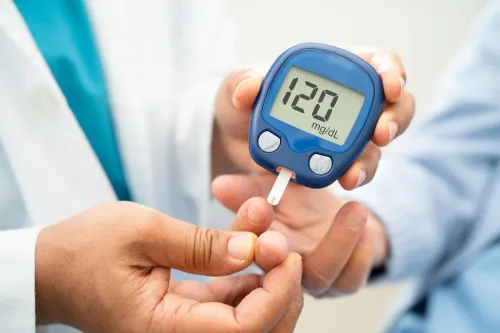
Home glucose monitoring pregnancy plans often include one fasting check and a check after each meal—four readings daily while treatment is being adjusted. Use this routine:
- Wash your hands with soap and water, then dry them completely. Food residue can distort the result.
- Insert a new test strip, use a fresh lancet, and obtain the blood drop from your fingertip.
- Apply the blood to the strip and record the reading with its exact time.
- Log the meal, medication, exercise, illness and post-meal timing. Start the clock at the first bite, not the last bite.
Repeat one unexpected result after washing and drying your hands. Repeated high or low readings need review by your care team. Contact them urgently for persistent very high readings, vomiting that prevents drinking, ketones, confusion or symptoms of severe low blood sugar such as shaking, sweating or faintness.
How meals, snacks and activity shape post-meal glucose
Distribute carbohydrate portions across meals and snacks rather than eating most of them at one sitting. A gestational diabetes meal plan should also account for nausea, cultural foods, weight gain, activity and medication.
1. Keep carbohydrate portions measured, not eliminated. For example, pair a care-team-set portion of whole-grain roti or rice with dal, vegetables and eggs, paneer, yoghurt or another suitable protein. Fibre and protein slow digestion and can reduce a sharp post-meal rise.
2. Do not skip meals or remove carbohydrates entirely. Extreme restriction can lead to inadequate nutrition and ketosis. Your clinician or dietitian should adjust carbohydrate portions during nausea, poor appetite, excessive weight gain or medication changes.
3. If your obstetric team has not restricted activity, try exercise after meals for gestational diabetes. A walk after eating uses working muscles to take up glucose, which can change the 1-hour or 2-hour meter reading.
Count the reading from the first bite, and follow your prescribed target rather than trying to drive glucose as low as possible.
4. Many guidelines use about 30 minutes of moderate physical activity during pregnancy each day when there is no obstetric contraindication. Suitable options include walking, swimming, stationary cycling and pregnancy-approved strength or mobility work.
5. Stop activity and call your maternity team for vaginal bleeding, fluid leakage, painful regular contractions, dizziness or fainting, chest pain, unusual breathlessness, calf pain or swelling, or reduced fetal movement.
When readings stay high and treatment needs to change
A single high reading does not automatically mean your gestational diabetes treatment plan has failed. Clinicians look for repeated fasting or post-meal readings above your assigned targets and review them with your glucose log.
NICE uses about 1–2 weeks as a practical reassessment point for diet and activity. The care team can act sooner when readings are substantially high, fetal growth is concerning, or complications are present. Treatment may be adjusted rather than waiting for the scheduled review.
Rising insulin needs are a biological effect of placental hormones that increase insulin resistance. They do not prove that you caused gestational diabetes or failed at lifestyle treatment.
| Medication | What it means | When it applies |
|---|---|---|
| Insulin for gestational diabetes | Preferred first-line option in many U.S. guidelines; it does not cross the placenta in clinically significant amounts | When diet and activity do not control the pattern |
| Metformin pregnancy diabetes treatment | Crosses the placenta; long-term offspring effects remain uncertain, and kidney problems or other factors can make it unsuitable | Considered in some settings after counselling |
Bring these details to a pregnancy-focused diabetes consultation:
- Fasting and post-meal patterns, meal timing and activity
- Current medicines, doses and any low-blood-sugar episodes
- Fetal-growth findings, blood pressure and other complications
Dr ARIF SHEIKH can help coordinate this review with obstetric care, so decisions address the full pattern rather than one reading of high blood sugar during pregnancy. A diagnosis alone does not require insulin or caesarean delivery; delivery planning also considers fetal growth, medication use and other obstetric findings.
How care continues through delivery and after the baby is born
Treatment for gestational diabetes does more than improve the next meter reading: it lowers the likelihood of excessive fetal growth and related birth complications. It cannot remove every obstetric or newborn risk or guarantee an uncomplicated delivery.
A diagnosis alone does not mean you need insulin or a caesarean delivery. Delivery planning considers glucose control, medication use, fetal growth, blood pressure and other obstetric findings.
Care for gestational diabetes after delivery includes a postpartum gestational diabetes test. ADA guidance recommends a 75-gram postpartum OGTT 4–12 weeks after delivery; the OGTT is preferred to A1C during this early interval because pregnancy-related red-cell changes can make A1C less reliable.
A normal result does not erase future diabetes risk. Arrange future diabetes screening at least every 1–3 years, and test sooner if symptoms or additional risk factors develop.
- Complete the 75-gram OGTT within the recommended 4–12-week window, even if your readings normalise after birth.
- Breastfeed if you choose and can do so; regular activity and healthy weight management support long-term cardiometabolic health.
- Tell your clinician about prior gestational diabetes before another pregnancy. Early glucose testing may be appropriate, followed by repeat screening at 24–28 weeks if the early result is normal.
Frequently asked questions
What is gestational diabetes, and how is it diagnosed?
Gestational diabetes is high blood sugar first identified during pregnancy. Screening uses an oral glucose tolerance test, often after an initial glucose test, even when you have no symptoms.
Which blood sugar numbers should you target during pregnancy?
Your clinician will set fasting and post-meal targets and tell you when to test. Record each reading with the time, meal details and activity so patterns are clear.
How do meals and activity affect post-meal glucose?
Carbohydrate portions, meal timing and food combinations affect post-meal glucose. Pair carbohydrates with protein and fibre, then take approved light activity after meals.
When does gestational diabetes treatment need to change?
Contact your care team when readings repeatedly exceed your prescribed targets, despite following your meal and activity plan. They may adjust monitoring, medication or insulin.
What happens after delivery if I had gestational diabetes?
Blood sugar often changes after the placenta is delivered, but follow-up remains important. Ask your clinician about postpartum glucose testing and ongoing diabetes-risk checks.