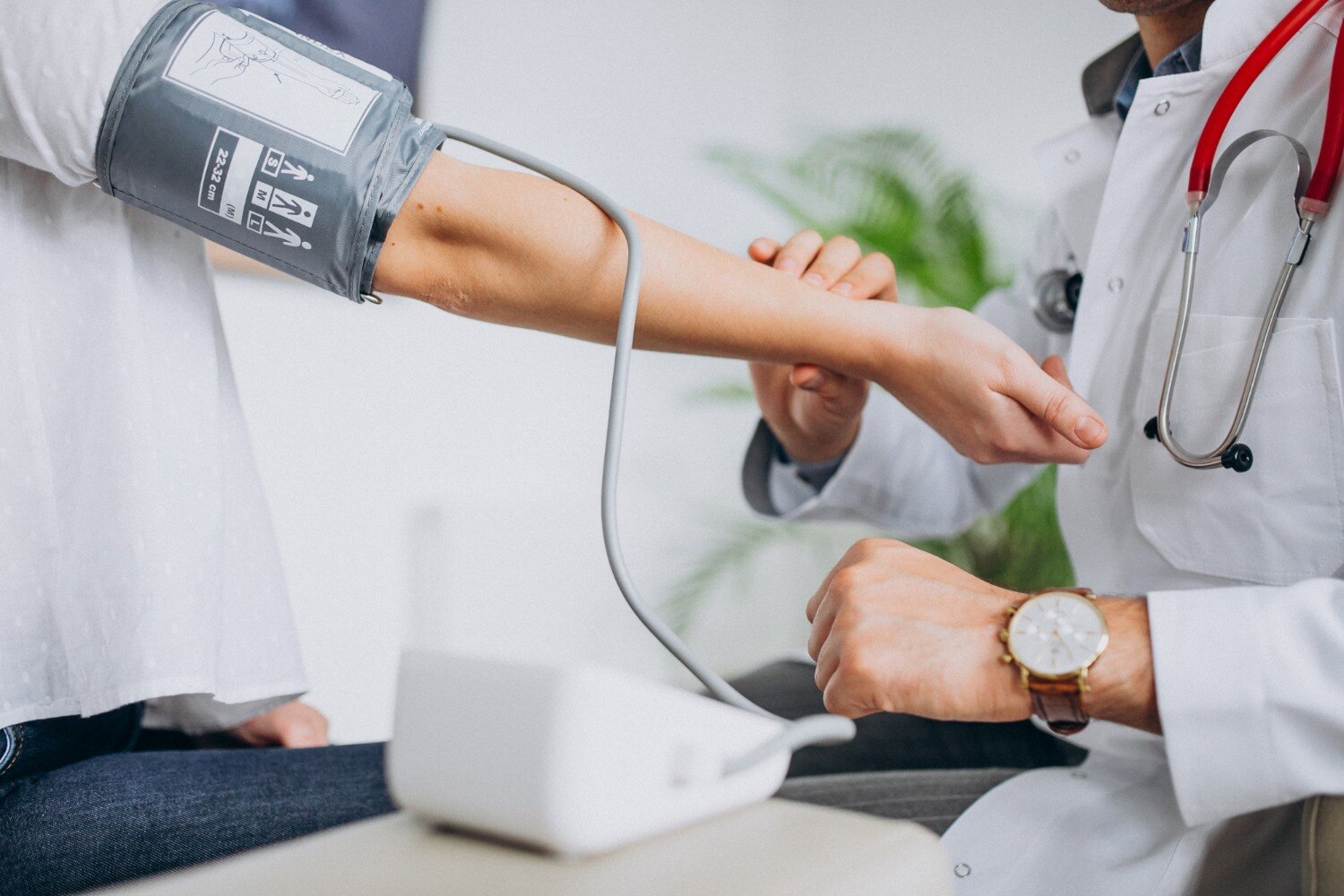
Repeated high readings need confirmation, accurate home measurements and a review of your overall risk—not an automatic specialist referral after one unusual result. By tracking your blood pressure correctly and recognising warning signs, you can decide whether to arrange routine care, seek assessment within days or obtain emergency help.
Key takeaways
- Confirm elevated blood pressure with careful readings on separate days.
- Use a validated upper-arm cuff and rest quietly before measuring.
- Compare home and office readings to identify white-coat or masked hypertension.
- Seek emergency care for very high readings with chest pain, weakness, or breathlessness.
How Many High Readings Count as Persistent Blood Pressure Elevation?
One high office reading does not establish persistent high blood pressure. Confirm persistent blood pressure elevation by repeating measurements carefully and checking whether the pattern remains on separate days.
1. At each session, sit quietly before measuring and take at least two readings, at least one minute apart. Record both values rather than relying on the lower or more reassuring result.
2. Repeat the process on two or more separate days or clinic visits. Base the assessment on the average of the valid readings, not on one unusually high measurement caused by stress, pain, recent activity or measurement error.
3. Use structured home monitoring or 24-hour ambulatory monitoring when feasible. These methods can reveal masked hypertension, in which office pressure looks normal but readings outside the clinic remain high, and white-coat hypertension, in which office readings are high but out-of-office readings are normal.
For adults, an average systolic pressure of 130–139 mmHg or diastolic pressure of 80–89 mmHg falls into stage 1 hypertension. An average of at least 140/90 mmHg indicates stage 2 hypertension. A home average near 135/85 mmHg roughly corresponds to an office reading of 140/90 mmHg, but a clinician must interpret the pattern.
Persistent stage 1 or stage 2 readings deserve clinical evaluation even when you feel well; hypertension often causes no symptoms. Diabetes, kidney disease, cardiovascular disease, pregnancy or evidence of organ damage makes specialist assessment more important.
How Should You Measure Blood Pressure at Home?
Use a validated upper-arm cuff, not a wrist monitor, for home blood pressure monitoring. Choose a cuff whose inflatable bladder fits your upper-arm circumference; a wrong size can produce falsely high or low readings.
Avoid caffeine, exercise and smoking for 30 minutes beforehand. Empty your bladder, sit quietly for five minutes, support your back, keep both feet flat on the floor, rest your bare arm at heart level and do not talk. Take two readings at least one minute apart in the morning and evening for several days.
Record every pair in a blood pressure log:
| Date | Time | Systolic | Diastolic | Pulse | Medication timing | Symptoms | Caffeine | Exercise | Pain | Missed doses |
|---|---|---|---|---|---|---|---|---|---|---|
| __ | __ | __ | _ | ___ | __ | __ | __ | __ |
Use both readings, not only the lower one. Note whether you measured before or after taking medication.
| Home average | Approximate office comparison | Meaning |
|---|---|---|
| Below 135/85 mmHg | Below 140/90 mmHg | Usually lower than the office threshold |
| Around 135/85 mmHg | Around 140/90 mmHg | Needs clinician interpretation |
| Above 135/85 mmHg | Above 140/90 mmHg | Discuss the pattern with a clinician |
The 135/85 and 140/90 comparison is approximate, not a diagnosis. A clinician must interpret the pattern, symptoms, medication timing and measurement quality.
How Can You Tell White-Coat Hypertension from Masked Hypertension?
The deciding evidence comes from comparing clinic readings with measurements taken outside the clinic. The three patterns guide whether a specialist should investigate further:
| Pattern | Clinic reading | Home or ambulatory reading | Meaning |
|---|---|---|---|
| Sustained hypertension | High | High | Blood pressure remains elevated in both settings. |
| White-coat hypertension | High | Normal | Clinic stress raises the reading, but out-of-office pressure is not persistently high. |
| Masked hypertension | Normal | High | A clinic reading misses hypertension present during usual daily life. |
Structured home monitoring or ambulatory blood pressure monitoring can separate these patterns. Ambulatory monitoring records readings throughout the day and night, while a properly completed home log shows your usual morning and evening levels. Confirming white-coat hypertension can prevent an unnecessary medication increase; identifying masked hypertension prevents false reassurance and missed treatment.
Persistent elevation also warrants assessment for target-organ damage, particularly when you have diabetes, kidney disease, cardiovascular disease or substantial cardiovascular risk. Ask what evaluation is appropriate, including:
- Urine albumin-to-creatinine ratio or urine protein testing
- Serum creatinine with estimated glomerular filtration rate
- Electrolytes, especially sodium and potassium
- Fasting glucose or HbA1c
- A lipid profile
- An ECG to assess cardiac effects such as left-ventricular hypertrophy
- An eye examination when visual symptoms, diabetes or suspected retinal damage makes it relevant
These findings help determine whether you need specialist input and how aggressively blood pressure should be managed.
When Does High Blood Pressure Need Routine, Prompt or Emergency Care?
Persistent stage 2 readings deserve routine specialist evaluation, even when you feel well. Persistent stage 1 hypertension also warrants referral when you have diabetes, kidney disease, cardiovascular disease, pregnancy, substantial cardiovascular risk or organ damage, or when treatment has not brought pressure under control.
1. Routine evaluation: Ask when to see a hypertension specialist if your confirmed readings remain in stage 2, or stage 1 hypertension occurs with any risk condition above. A specialist can review targets, medicines and evidence of kidney, heart, eye or blood-vessel injury.
2. Prompt assessment within days: Arrange review for difficult-to-control pressure or resistant hypertension. This means readings remain above your individual target despite three maximally tolerated drug classes: a long-acting calcium-channel blocker, an ACE inhibitor or ARB, and an appropriate diuretic. Controlled pressure requiring four or more medicines also qualifies.
Look for secondary hypertension when onset occurs before age 40, pressure worsens suddenly, potassium is low, kidney disease is present, an adrenal mass is found, or episodes include palpitations and sweating. Snoring or witnessed breathing pauses, sleep-apnea symptoms, and a family history of early hypertension or stroke also need discussion.
3. Emergency care: Recheck a reading of 180/120 mmHg or higher after a few minutes and obtain urgent clinical advice, even without symptoms.
Treat it as a 180/120 blood pressure emergency when chest pain, breathlessness, severe headache, confusion, weakness, numbness, vision loss or difficulty speaking occurs; seek emergency care instead of waiting for a routine appointment.
What Should You Bring to a High Blood Pressure Specialist Appointment?
1. Bring your completed home blood-pressure log, including dates, times, both readings from each session, pulse, medication timing, symptoms, caffeine, exercise, pain and missed doses. This helps the specialist compare your home pattern with clinic readings.
2. Take your blood-pressure monitor to the specialist blood pressure appointment. The clinician can compare it with a calibrated office device and identify errors from cuff size, arm position or device accuracy.
3. Write down every blood pressure medicine, over-the-counter product and supplement, with its dose and timing. Bring pharmacy records and list pain relievers, decongestants, steroids, stimulants or herbal products that could interfere with control.
4. Pack previous laboratory and imaging reports, including creatinine, estimated glomerular filtration rate, potassium, urine albumin or protein, glucose or HbA1c, lipids, ECGs and kidney or heart imaging. Add a family history of early hypertension, stroke, kidney disease or heart disease.
5. Record snoring, witnessed breathing pauses, palpitations, sweating, headaches and medication side effects. Before a resistant hypertension evaluation, the specialist may check measurement error, missed doses, interfering substances and whether the diuretic regimen is adequate.
6. Expect assessment of kidney function, potassium, albuminuria, diabetes and cardiovascular disease, with coordination involving diabetology, nephrology or cardiology when needed. Dr ARIF SHEIKH can provide focused internal-medicine and diabetology assessment for Sanpada Navi Mumbai hypertension care when repeated readings, related conditions or possible secondary causes complicate treatment.
Related services
Blood Pressure Checkup Check Your BP: Take Control of Your Health High blood pressure can be silent, but it shouldn't be ignored. View service → |
24 hour Holter ECG and BP monitoring 24 hour Holter ECG and BP monitoring 24-Hour Holter Monitoring: Track Your Heart's Rhythm Get a comprehensive view of your heart's activity with our 24-hour Holter ECG and BP monitoring. View service → |
Frequently asked questions
How many high readings count as persistent blood pressure elevation?
One high office reading does not confirm persistent hypertension. Repeat two readings one minute apart during each session and check the pattern on separate days.
How should you measure blood pressure at home?
Use a validated upper-arm monitor with the correct cuff size. Avoid caffeine, smoking, and exercise for 30 minutes, empty your bladder, rest for five minutes, keep your back supported and feet flat, and support your arm at heart level.
How can you tell white-coat hypertension from masked hypertension?
White-coat hypertension means readings are high in a clinic but normal at home. Masked hypertension means clinic readings appear normal while home or out-of-office readings are high. A structured home log or ambulatory monitoring helps distinguish them.
When does high blood pressure need routine, prompt, or emergency care?
Arrange routine evaluation for repeated elevated readings. Contact a clinician promptly for persistently very high readings or concerning symptoms. Seek emergency care for a reading of 180/120 mmHg or higher with chest pain, severe breathlessness, confusion, weakness, vision changes, or difficulty speaking.
What should you bring to a high blood pressure specialist appointment?
Bring your home blood pressure log, monitor if possible, medication and supplement list, medical records, recent test results, and details of symptoms, caffeine, smoking, sleep, and family history.